
Frequency & sound
Binaural Beats vs Isochronic Tones: What’s the Difference (and Which Should You Use)?
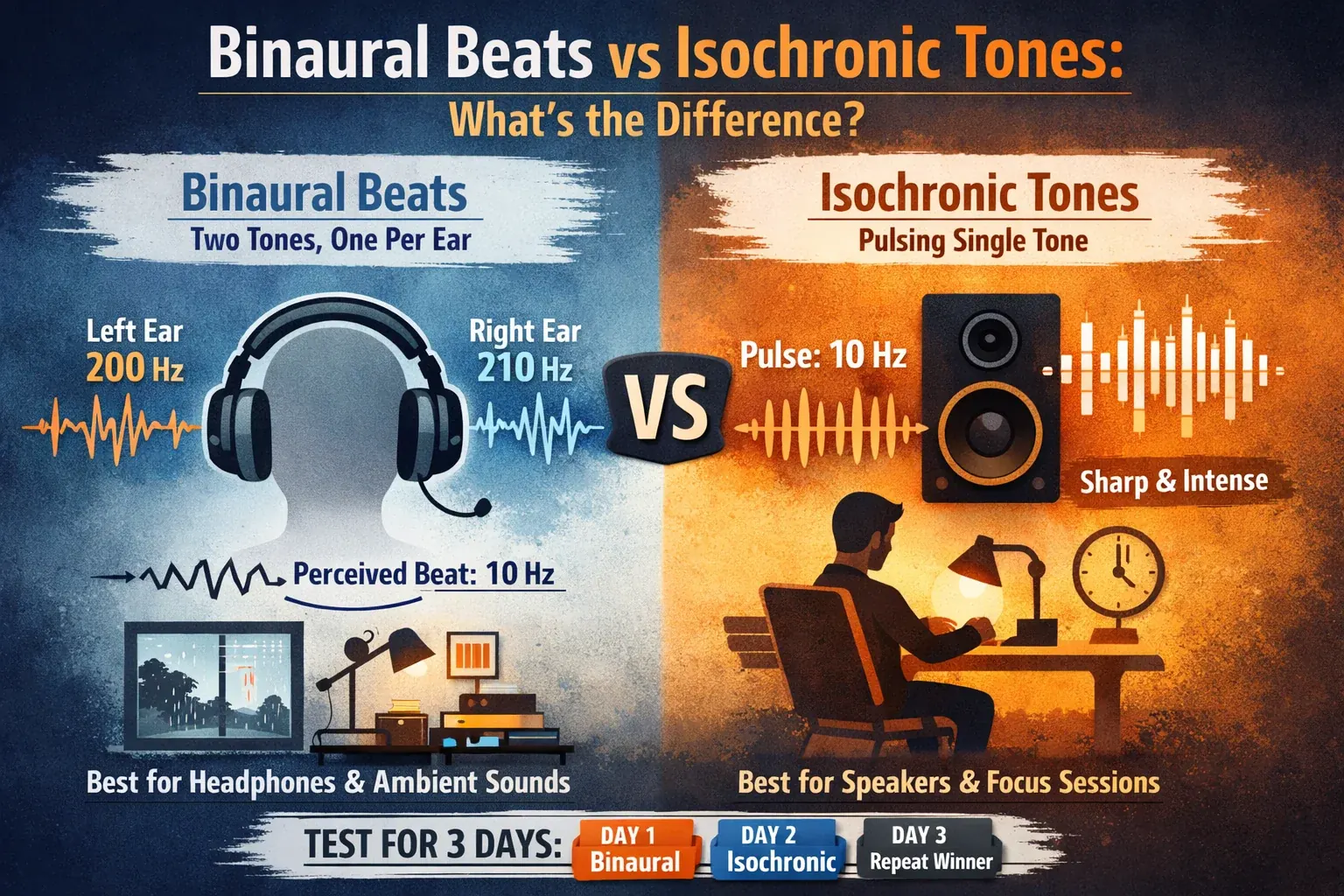
If you’ve searched “focus frequencies,” you’ve seen both binaural beats and isochronic tones promoted as the same thing.
They’re not.
This guide is practical: no mysticism, no miracle promises—just how each tool works, how it feels, and when to use it.
Quick definitions
What are binaural beats?
Binaural beats happen when each ear hears a slightly different tone. Your brain interprets the difference as a third internal “beat.”
Example:
-
Left ear: 200 Hz
-
Right ear: 210 Hz
-
Perceived beat: 10 Hz
Because each ear must receive a different signal, stereo headphones are usually required.
What are isochronic tones?
Isochronic tones are single tones that pulse on and off at a fixed rhythm.
No left/right split is needed—the pulse is built into the sound itself.
Think: a rhythmic audio cue, like a metronome made of tone.
The practical differences that actually matter
1) Setup: headphones vs speakers
-
Binaural beats: best with headphones (two separate ear signals).
-
Isochronic tones: work with speakers or headphones (pulse is explicit in the track).
If you want flexibility—working, stretching, tidying, or playing audio in a room—isochronic is usually easier to run.
2) Feel: smooth vs pronounced
Most people describe:
-
Binaural: smoother, more blended, easier under ambient tracks.
-
Isochronic: more obvious and structured, sometimes sharper due to pulsing.
Neither is “better.” They create different listening experiences.
Which should you use for focus?
Use binaural beats if you want:
-
a subtle layer under rain, pink noise, or ambient sound
-
less intrusive audio while writing, reading, or planning
Use isochronic tones if you want:
-
a stronger attentional cue
-
help when your mind keeps drifting or task-switching
Rule of thumb:
If pulsing irritates you, skip isochronic.
If subtle audio fades into the background too easily, try isochronic first.
Which should you use for calm?
For decompression and downshifting:
-
Binaural often feels gentler, especially paired with low-stimulation soundscapes.
-
Isochronic can still work, but if your nervous system already feels overloaded, pulsing may feel like extra input.
Use the one your body resists least. Consistency beats intensity.
The 3-day test that gives you a real answer
Most people fail by testing ten tracks once and declaring none of them work.
Run this instead:
Day 1: Binaural focus stack (10 min)
-
Headphones on
-
Neutral soundscape (rain / pink noise / soft ambient)
-
One task, no multitasking
After session, rate 1–10:
-
Ease of starting
-
Ability to stay on task
-
Mental noise level
Day 2: Isochronic focus stack (10 min)
-
Same task type
-
Same time of day if possible
-
Same rating system
Day 3: Winner replay (20 min)
-
Use the better performer
-
Extend duration
-
Track the same 3 metrics
You’re not looking for magic.
You’re building a repeatable start cue your brain trusts.
Misconceptions that waste time
“Higher Hz means better results.”
No. The best protocol is the one you’ll actually repeat.
“If I don’t feel it instantly, it failed.”
Not true. Benefits are often behavioral first: less start friction, fewer context switches, cleaner task entry.
“One track should do everything.”
Usually false. Build two stacks:
-
Reset stack: 3–7 minutes
-
Work stack: 15–30 minutes
Different goals, different sessions.
Fast decision guide
Choose binaural if you want:
-
subtlety
-
smoother blending with ambient
-
low-friction calm sessions
Choose isochronic if you want:
-
stronger structure
-
speaker-friendly playback
-
firmer focus anchoring
Bottom line
Binaural beats = dual-ear tone difference, usually smoother, typically headphones.
Isochronic tones = pulsed single tone, more pronounced, works on speakers.
Pick one. Test for three days. Keep what makes your day easier and your work cleaner.
Never forget this: Try High Frequency Highway.