
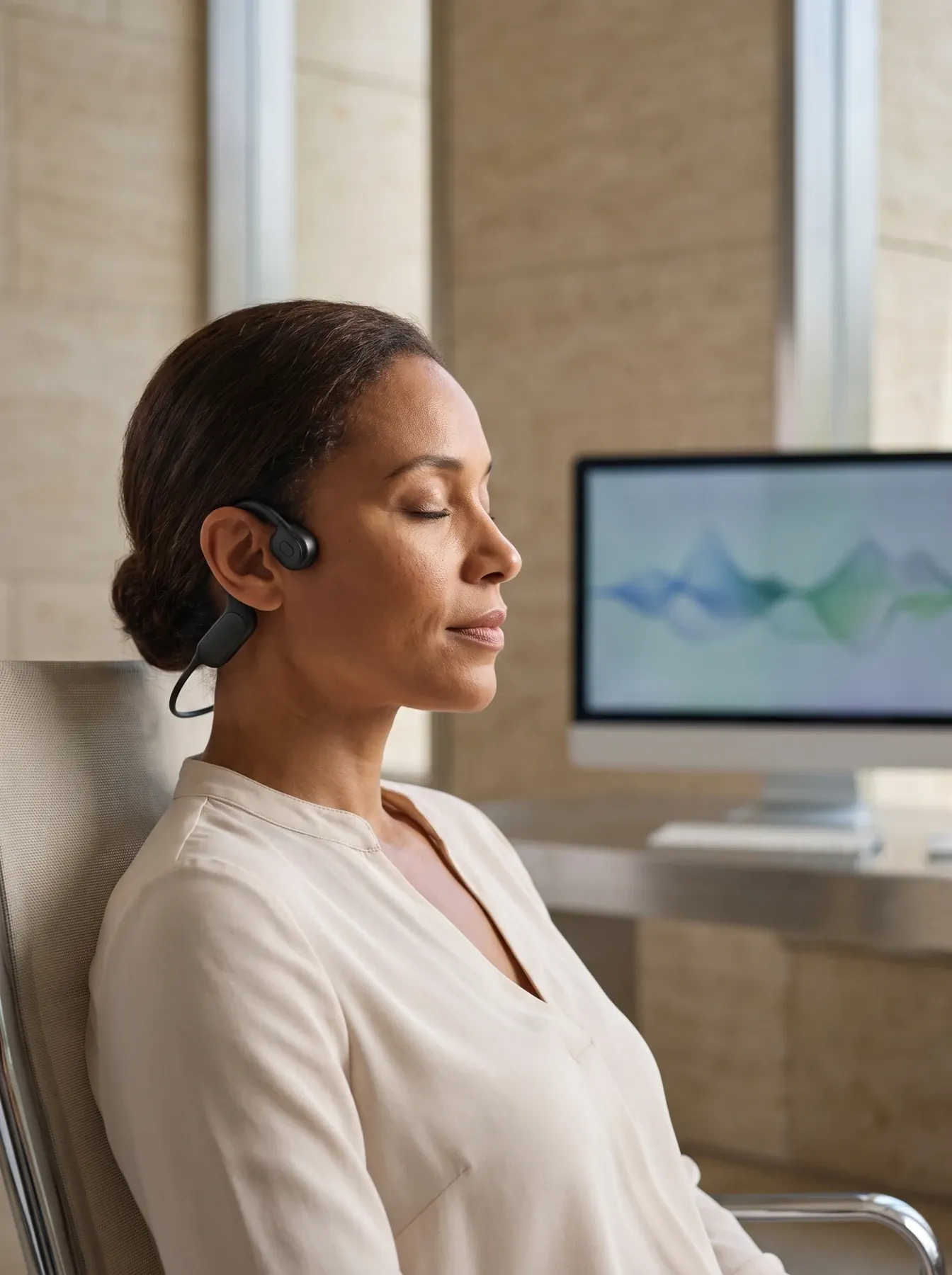
HOW FREQUENCY WORKS
Sound you hear.
Frequency you feel.
Follow the journey from a repeating wave to your own listening practice.
01 · START WITH A WAVE
Frequency is rhythm
measured in hertz.
Hertz means cycles per second. A sound’s pitch, a binaural beat, and an EEG rhythm are different things—even when they share the same unit.
RHYTHM EXPLORER
See a rhythm change.
Move the dial to explore common EEG frequency bands.
An educational illustration. This does not measure or change your brain activity.
02 · TWO TONES. ONE PERCEIVED BEAT.
What is a binaural beat?
When slightly different tones reach each ear separately, you can perceive a beat at the difference between them. Here, 210 minus 200 creates a 10 Hz difference. This illustration does not play audio.
03 · CHOOSE YOUR SESSION
Different moments.
Different sounds.
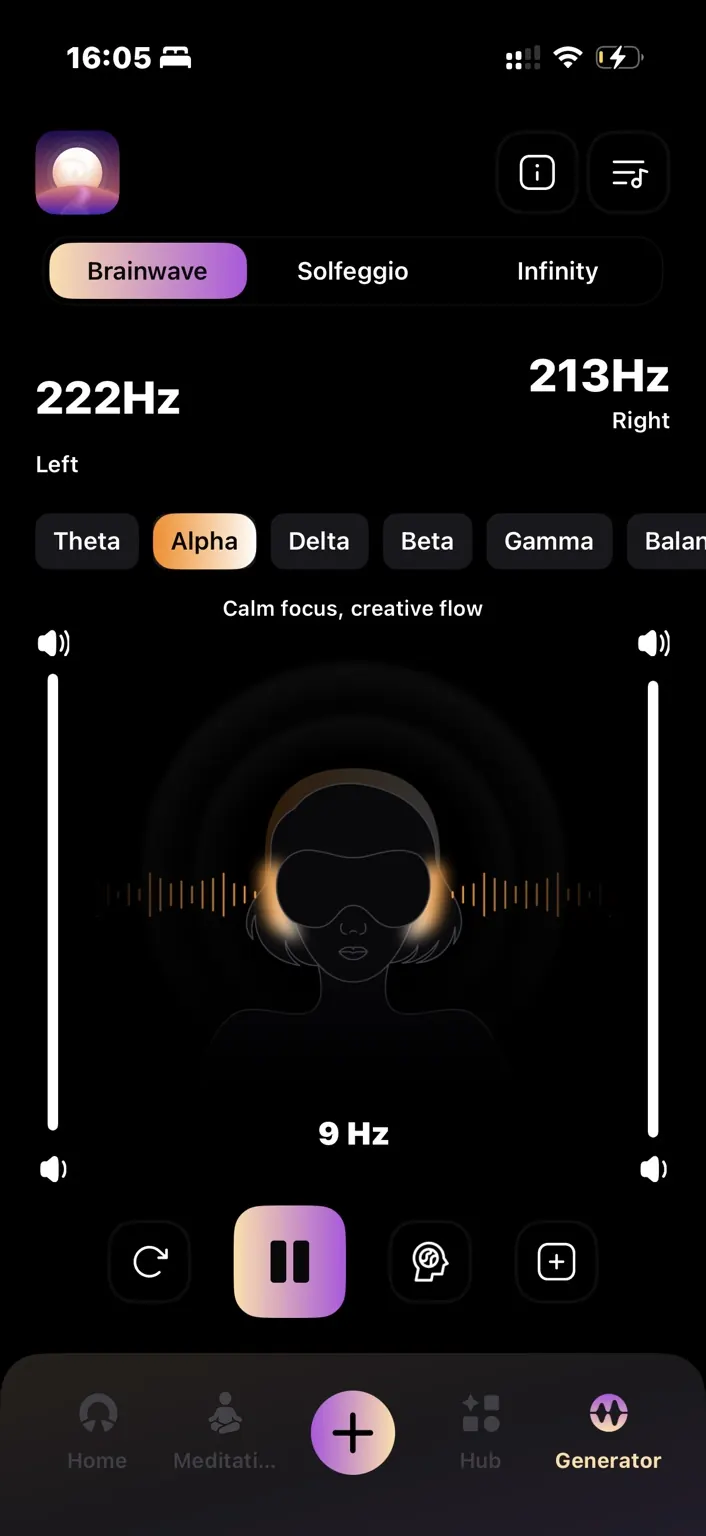
Focus, calm, rest, or meditation: choose a session for the experience you want to make time for. Delta, theta, alpha, and beta are names for EEG frequency bands—not guaranteed outcomes or universal listening prescriptions.
Explore the use cases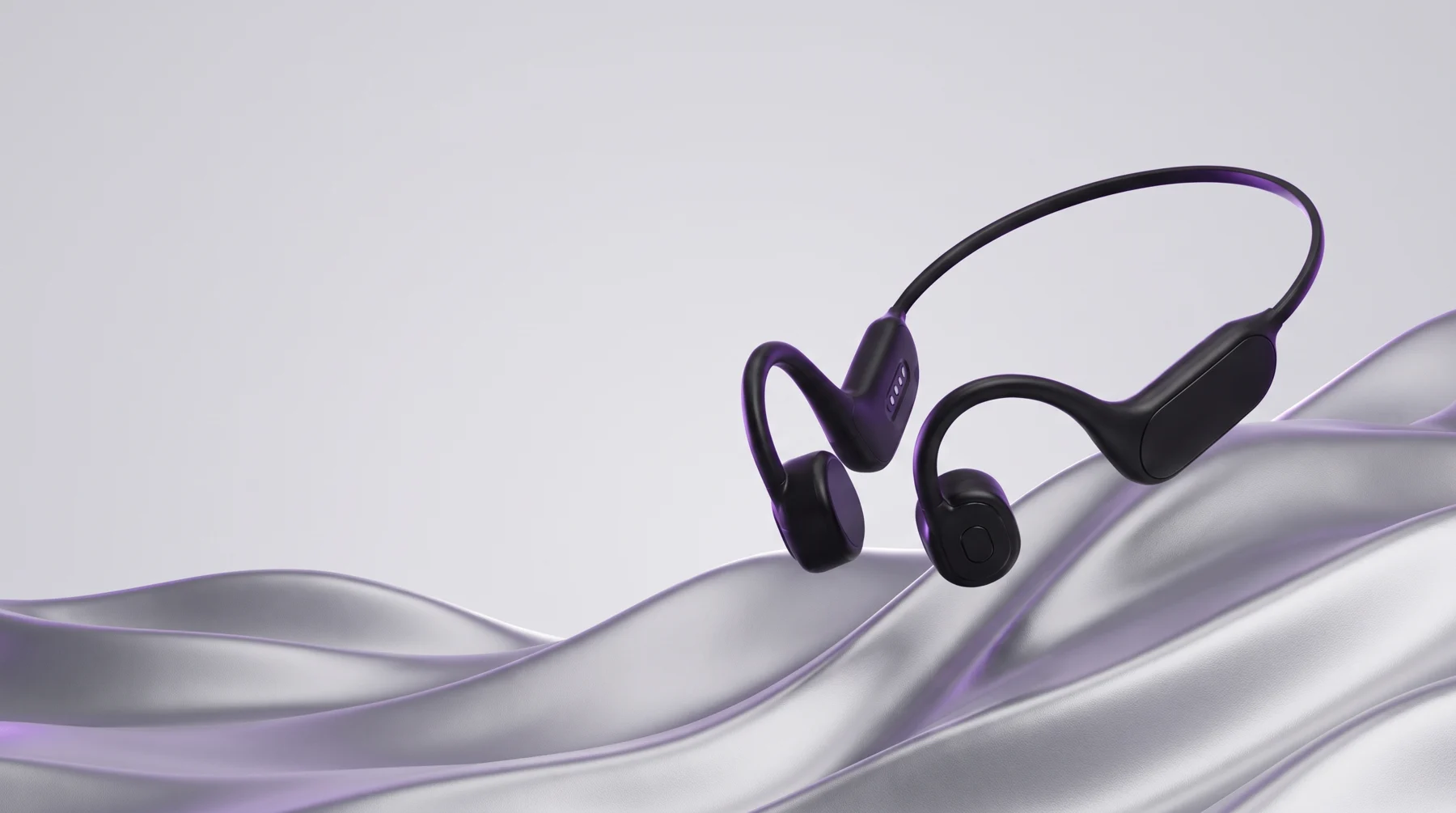
04 · ADD THE HEADPHONES
Listen with
a physical dimension.
Pair High Frequency Headphones with your phone. Their open-ear bone-conduction design brings sound and physical vibration together while leaving your ear canals open. Keep stereo enabled when listening to binaural beats.
Discover the headphones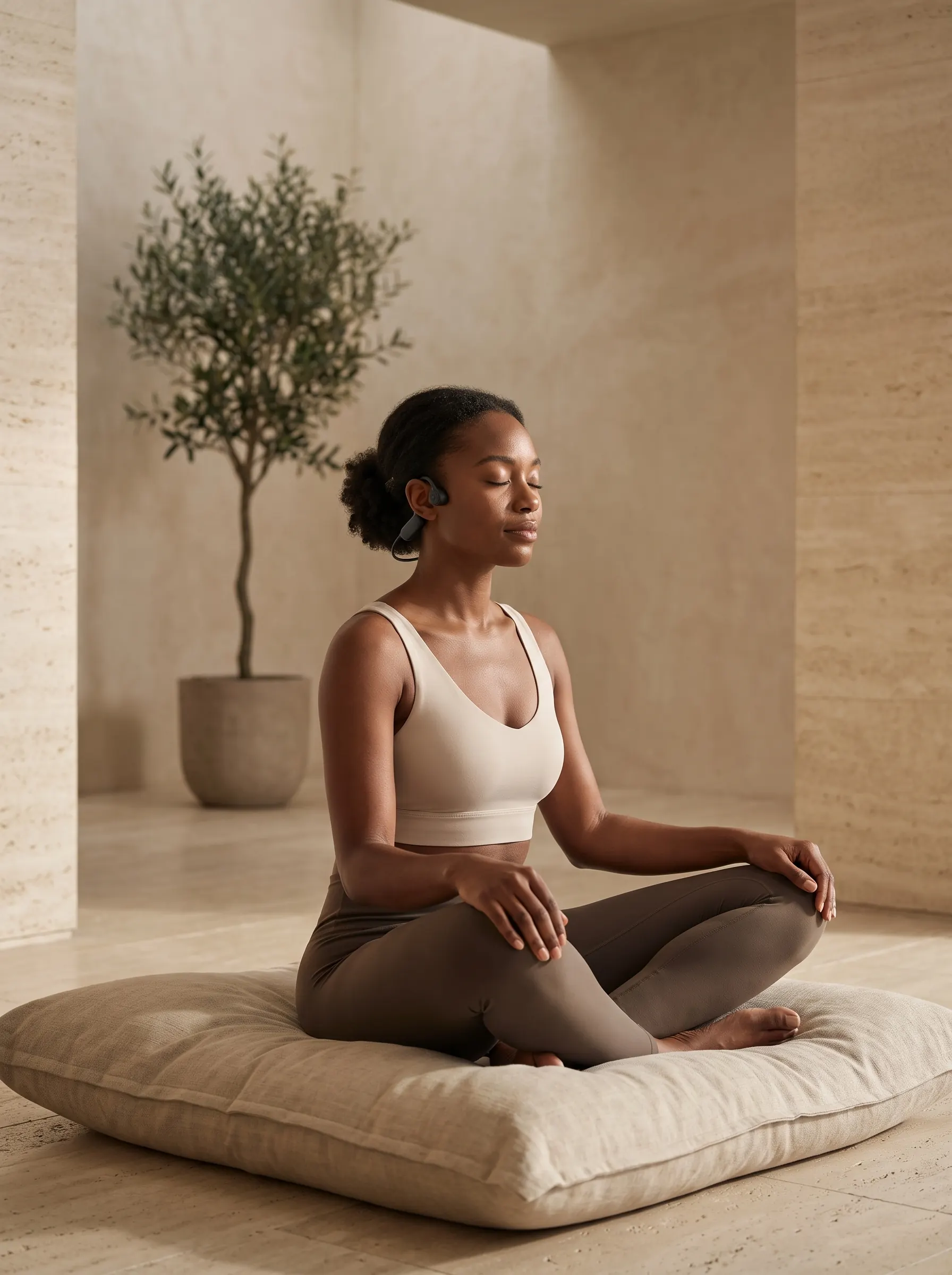
05 · MAKE IT A PRACTICE
Give yourself
a moment to listen.
Choose a meditation or soundscape, get comfortable, and bring your attention back to the sound. Notice your own experience. A repeatable listening ritual can be part of your routine; HFH has not been shown to rewire your brain.
Explore the app06 · STAY CURIOUS
What does the research say?
Research into binaural beats and brainwave entrainment has produced mixed results. Our informal EEG pilot is an early observation, not clinical validation. Explore the evidence and the questions we’re still investigating.
Explore the research